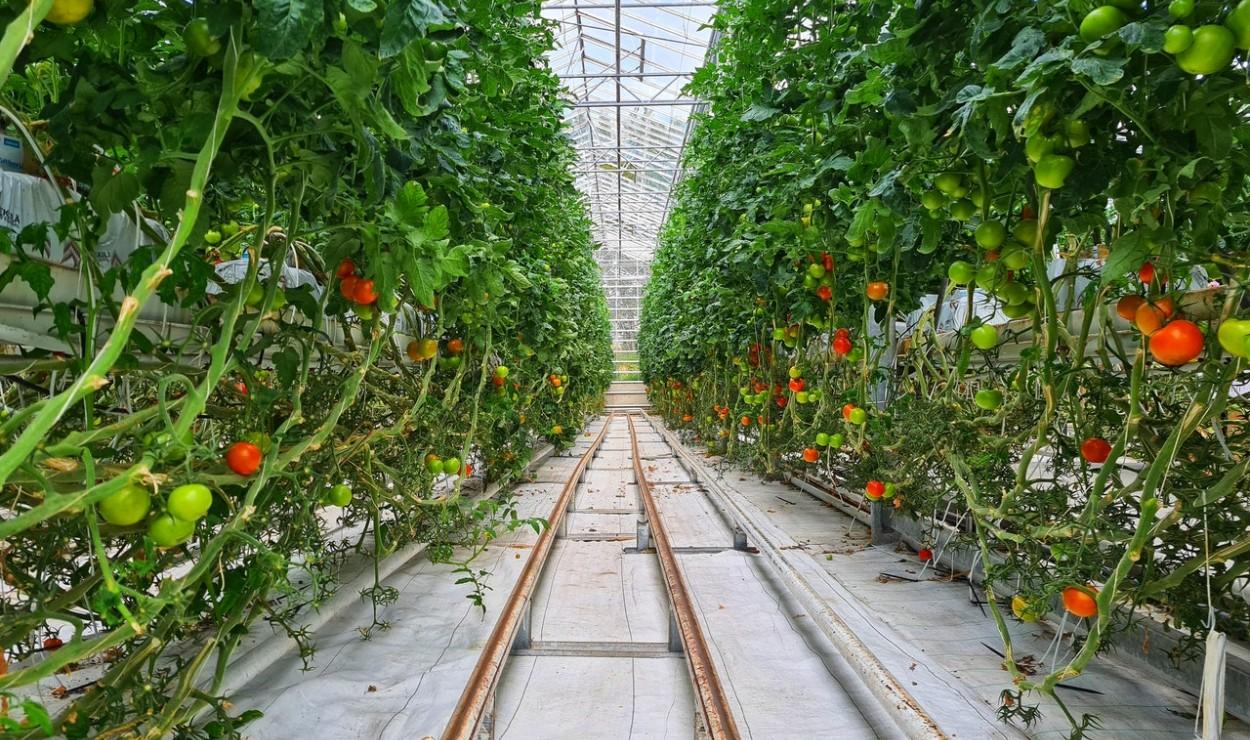
A greenhouse is an enclosed agricultural area covered with transparent film, where vegetables, herbs, flowers, and early-season plants are grown. Constructing a greenhouse is not very difficult, but the investment can be costly if the cultivated area is large and high-quality materials are used.
Building a greenhouse can be the right solution for you, allowing you to grow what you want on your own land. To make the investment worthwhile and achieve a profit proportional to your effort, several aspects must be considered. Your plan should include the location, area, type of crops, materials used, and utilities required for cultivation.
1. Choosing the location
One of the main advantages of a greenhouse is that you can harvest crops several weeks earlier than those grown in the open field. The site is crucial and should be chosen based on the type of greenhouse, the total area, and the intended crops.
Inside a greenhouse, plants grow in a controlled environment with optimal conditions for development. Therefore, it should be positioned in a location with no shade, low risk of flooding, preferably on a slight slope, with nutrient-rich soil.
2. Budget allocation
A greenhouse project starts from scratch, and the total investment can be significant. It is essential to carefully calculate what materials you can afford.
If your budget is insufficient, you can apply for an agricultural loan from Mikro Kapital. For example, with RON 45,000 secured by a personal guarantee, you can cover investment costs such as constructing the greenhouse, storage facilities, or irrigation systems.
Higher amounts are also available: up to RON 135,000 with a personal guarantee and movable collateral, or up to RON 700,000 with a personal guarantee and immovable collateral. Loans can be obtained quickly, with minimal documentation, grace periods, and flexible repayment schedules, taking into account the seasonal nature of your business.
3. Greenhouse structure and materials
Vegetable, fruit, and flower cultivation requires ample space. The most common greenhouses are semicircular metal-frame structures. Pipes can be made from polypropylene (PPR), plastic (PVC), aluminum alloy, galvanized or non-galvanized steel.
For higher investments, you can build a traditional house-style greenhouse with a durable double-pitched roof and a complex wooden structure. This will increase the project budget.
The greenhouse covering is usually polyethylene, specially designed and treated to provide UV resistance, thermal insulation, transparency, and elasticity, ensuring optimal conditions for plant growth.
Accessories such as clips for the film, gutters, wires, metal rods, planks, and screws should also be included in the project budget.
4. Connecting utilities
Water is essential for any crop, and irrigation systems vary depending on the type of seedlings. Drip irrigation is common in Romania, requiring properly installed tubes or drip lines. Other irrigation methods include sprinklers.
Heating during the cold season is important, as different crops have different requirements. Wood or sawdust stoves are the most affordable options to maintain an adequate microclimate. Electric radiators, boilers, and wired seedbeds are other options, though more costly.
5. Soil preparation
The soil must first be disinfected using solutions specifically designed for greenhouses to combat diseases and pests. Fertilization follows, then loosening and preparation for planting. These operations become more complex if certain seedlings or crops require special conditions.
6. Additional tips
- Greenhouse doors can be made from various materials, but ideally, there should be an outer wooden or metal door and an inner plastic curtain or sliding door.
- Height is important and should be considered based on the crops to be planted.
- A greenhouse can be a lightweight structure that can be moved if the soil becomes nutrient-deficient.
- A tall greenhouse provides better ventilation. Include multiple vents for optimal air circulation.
- At certain times of the year, the greenhouse may need to be opened so sunlight, rain, and snow can enrich the soil.
- Shade nets can be used to ensure uniform plant growth while protecting crops from excessive sunlight.
- Building the greenhouse yourself can save money, but mistakes may lead to losses. If hiring specialists, choose a company with experience and quality products.
- Greenhouse kits are available on the market, but choose carefully.
Constructing a greenhouse is a significant investment that requires careful planning. The budget is essential. If you don’t have enough funds, non-banking financial support can help. The success of your business depends on the crops you choose and the care you provide.
Using quality materials can make the investment expensive, but with non-banking financial support, you can access the funds needed to bring your greenhouse project to life.
Photo source: pexels.com
