Events in recent years have shown how important financial independence is and have highlighted the opportunities for entrepreneurial initiatives, both for microenterprises and SMEs, as well as agricultural and livestock farms. Among all fields of activity, agriculture has seen the most growth, as it offers the chance for sustainable and profitable long-term businesses.
Here’s an agro-business suggestion you might not have considered: saffron cultivation, the world’s most expensive spice, with prices ranging between €8,000 and €13,000 per kilogram. For this reason, it is called the red gold of gastronomy, being a star in the world’s top restaurants. The largest saffron producer is Iran, followed by Morocco, Greece, and the Indian state of Kashmir.
How to Grow a Saffron Crop
Saffron is a Mediterranean plant from the iris family, from which several valuable components are extracted: saffron spice, aromatic oils, and substances with various uses in medicine and gastronomy. Growing a profitable saffron crop requires attention and patience.
Choose the Right Land for Saffron
The first step is selecting suitable land, which should have clay-limestone soil in a sunny area without excessive moisture. Sunlight is essential for a successful saffron crop, so finding the right location is the key to success.
Find Financing for Your Saffron Crop
If you do not own such land, look for a suitable agriculture loan to acquire at least half a hectare to start. You need a solid business plan, as the first year will not yield profit—patience and perseverance are crucial. The results will reward your dedication.
The price per gram of pure saffron often exceeds €20 in foreign markets. In Romania, it is less well-known, so prices are lower, but the trend is increasing. Saffron bulbs can also be sold and planted, yielding significant quantities in 3–4 years (one bulb can grow into a dozen).
Cultivate Your Saffron Professionally
The main challenge is professional saffron cultivation. It is a good business for farmers because its planting, growing, and harvesting cycle differs from other crops, making it a complementary crop to cereals.
You can easily find labor for harvesting, as other crops will already have been collected. Access agriculture loans to cover startup costs and operational expenses.
Buy Crocus sativus bulbs, which look like garlic cloves, and plant them in late summer (mid-August to late September). Plant in ordered rows, 10–15 cm apart, and ensure medium irrigation to prevent bulb rot from excess water. Spraying is not recommended, as saffron is quite resilient. Organic cultivation is preferable, as it is better valued on the market.
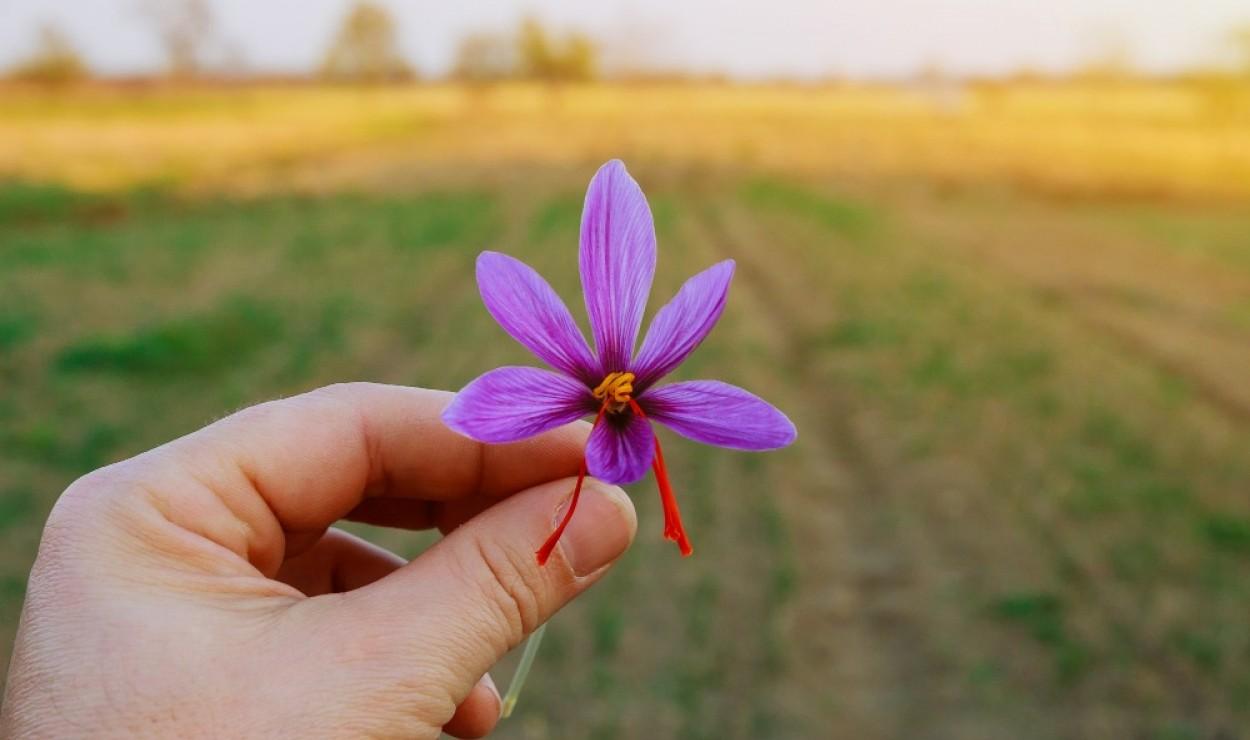
Within 2–3 weeks, small plants with long, thin leaves will grow, producing stunning flowers in shades from lilac to purple and violet. These flowers bloom once a year and last for only two weeks.
Harvesting Saffron
Harvesting is the most challenging part. It must be done before sunrise, among the dew, while flowers are still closed. This is done entirely by hand, requiring at least five workers.
After harvesting, the red filaments (saffron threads) are extracted manually. Each flower has 3 filaments weighing about 2 mg each. To obtain 1 kg of saffron, almost 200,000 flowers are needed. The threads are dried in special ventilated ovens due to their high water content.
Saffron powder, as known in stores, is the result of this labor-intensive process, which explains its high price.
How to Make Profit from Saffron
The high price of saffron attracts entrepreneurs. Because counterfeit products exist, serious sellers should comply with ISO 3632-1:2011 and ISO 3632-2:2010 quality standards. After certification, saffron can be monetized in several ways:
Sell Saffron

The simplest approach is selling saffron powder to sectors using it as a spice (restaurants, organic food producers, retailers) or as an ingredient in natural remedies (protects eyesight, has anticancer properties, supports heart health, and lowers cholesterol).
High-quality saffron commands good prices, especially since the market has many adulterated products mixed with inferior powders.
Open an Online Store for Saffron Products
If you have resources, opening an online store with saffron-based products is a good option. Popular items include body care and rejuvenation creams, natural soaps, and essential oils. You will need a functional website and can consider eCommerce financing options to build a professional online platform for rapid market entry.
A strong marketing strategy and proper positioning will ensure success, as saffron is the spice richest in antioxidants, making it a powerful ally against skin aging and UV damage.
Study saffron cultivation carefully and consider entering this niche market, which is growing fast and offers products used in gastronomy, pharmacy, natural therapies, and cosmetics.
Photo sources: freepik.com, piqsels.com, freepik.com
